






The Complete US Guide to Building a Precious Metals IRA
A gold and silver IRA is a self-directed individual retirement account (SDIRA) governed by IRS Section 408(m) that allows you to hold IRS-approved physical bullion — gold at ≥99.5% purity and silver at ≥99.9% — with the same tax advantages as a traditional or Roth IRA. A gold and silver IRA accepts rollovers from 401(k), 403(b), and Traditional IRA accounts via the 60-day rule or a direct trustee-to-trustee transfer, per IRS Publication 590-A.
Under IRS Section 408(m), gold held in a self-directed IRA must meet 99.5% purity and silver must meet 99.9%. The 2026 annual contribution limit is $7,000 ($8,000 if age 50+). IRS regulations require all precious metals to remain at an IRS-approved third-party depository — home storage triggers immediate taxes and a 10% early-withdrawal penalty under IRC Section 408(m)(3)(B).
What Is a Gold and Silver IRA?
A gold and silver IRA is an IRS-approved self-directed retirement account (SDIRA) governed by IRC Section 408(m) that holds physical gold (≥99.5% purity) and silver (≥99.9% purity) instead of stocks or mutual funds — providing the same tax advantages as a Traditional or Roth IRA with the addition of counterparty risk elimination through direct physical ownership. The 2026 contribution limit is $7,000 ($8,000 age 50+). Unlike standard brokerage accounts, a gold and silver IRA requires an IRS-approved SDIRA custodian and third-party depository storage that meets IRS Section 408(m)(3) requirements.
These accounts can be structured as a Traditional IRA (tax-deferred growth, RMDs beginning at age 73), a Roth IRA (tax-free qualified withdrawals, no RMDs during the owner's lifetime), or through SEP and Solo 401(k) structures for self-employed individuals.The IRS requires all metals to meet minimum fineness standards: 99.5% for gold, 99.9% for silver, and 99.95% for platinum and palladium.

The SDIRA custodian handles all account administration, IRS Form 5498 reporting, and regulatory compliance with the Internal Revenue Service.The gold IRA company sources IRS-approved bullion — including qualifying bars and coins such as the American Gold Eagle, Canadian Maple Leaf, and Austrian Philharmonic — from vetted dealers and arranges direct delivery to your designated depository.
How a Gold and Silver IRA Protects Retirement Savings
A gold and silver IRA reduces retirement portfolio volatility: gold's 20-year correlation coefficient to the S&P 500 is approximately −0.02, per World Gold Council data (2024), meaning it moves independently of equities — a documented diversification effect confirmed during the 2008 financial crisis, when gold gained 5.5% while the S&P 500 fell 37%. Gold's average annual return was approximately 7.8% over the past 20 years, with peak outperformance during the 2001 dot-com crash, the 2008 crisis, and the 2020 COVID market shock. As a monetary metal, gold also benefits from fiat currency debasement: when central banks expand the M2 money supply, gold historically preserves purchasing power where cash erodes.
A gold and silver IRA holds physical bullion that retains intrinsic value regardless of stock market performance, corporate earnings, or Federal Reserve policy — unlike stocks, bonds, or ETFs, which represent claims on a third party that can default, dilute, or suspend payments. Beyond gold, silver's dual role as both a monetary metal and an industrial commodity (50%+ of annual demand from industrial applications) provides additional portfolio diversification.

Account Types: Traditional IRA, Roth IRA, SEP IRAs, and Solo IRAs
You can open a gold and silver IRA as a traditional IRA, Roth IRA, or in some cases through SEP IRAs and solo IRAs for self-employed individuals. Each type has different tax implications and tax advantages:
| Account Type | Contributions | Withdrawals | RMDs Required | Best For |
|---|---|---|---|---|
| Traditional IRA | Pre-tax (tax-deductible) | Taxed as income | Higher tax bracket now | |
| Roth IRA | After-tax | Tax-free (qualified) | No | Lower tax bracket now |
| SEP IRA | Pre-tax (employer) | Taxed as income | Self-employed, higher limits | |
| Solo 401(k) | Pre-tax or Roth | Depends on type | Varies | Business owners, max savings |
Traditional IRA Precious Metals Account
A traditional IRA offers tax-deferred growth. You may get current-year tax benefits when contributions are deductible, and your assets can grow tax deferred. Withdrawals in retirement are taxed as ordinary income, and you will eventually face required minimum distributions (RMDs) once you reach the applicable age.
Roth IRA Precious Metals Account
A Roth IRA is funded with after-tax dollars. Qualified withdrawals are tax free, which can be appealing if you expect to be in a higher or similar tax bracket later. Roth accounts do not have required minimum distributions during the lifetime of the original owner.
How a Precious Metals IRA Works: Step by Step
Choose a Custodian
Select a self-directed IRA custodian experienced with precious metals accounts.
Fund Your Account
Transfer from existing IRA, rollover from 401(k), or make new contributions.
Select Your Metals
Work with a dealer to choose IRS-approved gold, silver, platinum, or palladium.
Secure Storage
Metals ship to an IRS-approved depository with insurance and audit protocols.
Manage & Grow
Monitor your holdings and make additional purchases as your strategy requires.
IRS Rules and Approved Metals for a Gold and Silver IRA
The IRS requires gold at ≥99.5% purity and silver at ≥99.9% under Section 408(m). Approved coins and bars must be produced by a national government mint or an accredited refiner (NYMEX/COMEX-approved or LBMA-listed). IRS Section 408(m) prohibits numismatic coins and collectibles in an IRA; a purchase triggers an immediate taxable distribution and a 10% early-withdrawal penalty.
IRS-Approved Coins and Bars
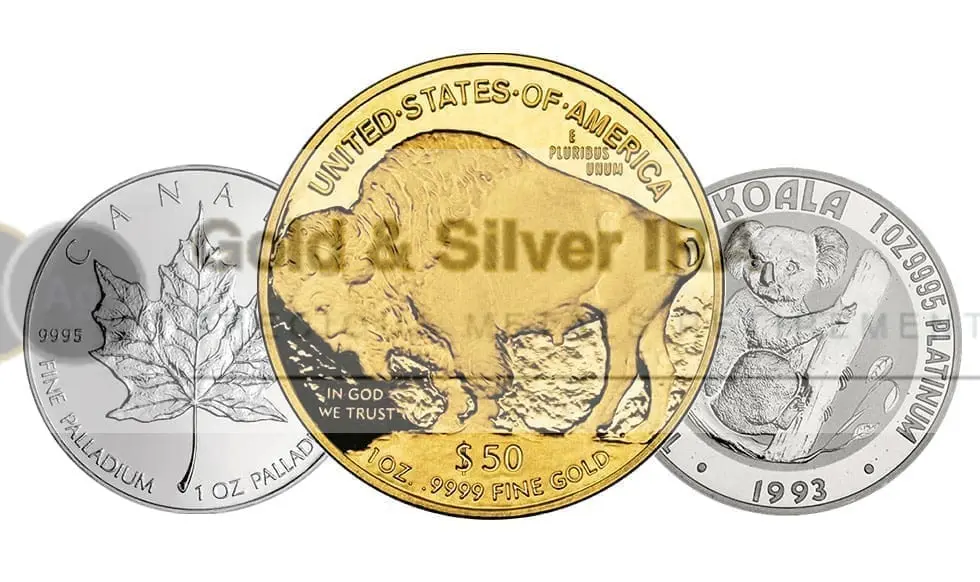
- Gold: American Gold Eagle (1 oz, 1/2 oz, 1/4 oz, 1/10 oz), Canadian Gold Maple Leaf, Austrian Gold Philharmonic, Australian Gold Kangaroo, PAMP Suisse gold bars (99.5%+)
- Silver: American Silver Eagle, Canadian Silver Maple Leaf, Austrian Silver Philharmonic, Australian Silver Kookaburra, PAMP Suisse silver bars (99.9%+)
- Platinum: American Platinum Eagle, Canadian Platinum Maple Leaf (99.95%+)
- Palladium: Canadian Palladium Maple Leaf (99.95%+)
- Proof coins are eligible if they meet purity requirements and come in original government packaging with certificate of authenticity
Not eligible: South African Krugerrands (91.67% gold purity), pre-1933 collectible coins, rare/numismatic coins, and any coin or bar below IRS fineness thresholds.

Gold and Silver IRA Fees: Setup, Custodian, and Storage Costs
A gold and silver IRA typically costs $250–$350 per year in combined custodian and storage fees, plus a one-time $50–$150 setup fee and a dealer markup of 3–8% above spot price (the bid-ask spread on buyback is typically 1–3% below the ask price). A $50,000 account paying $300/year in fees has a 0.6% cost drag — compare this against a gold ETF's 0.40% expense ratio before choosing your vehicle.
| Fee Type | Typical Range | Notes |
|---|---|---|
| Account Setup | $0–$150 | One-time; some companies waive for large accounts |
| Annual Custodian Fee | $75–$100 | Covers IRS reporting (Form 5498), account administration |
| Storage Fee (Segregated) | $100–$200/year | Your metals stored separately; higher security |
| Storage Fee (Commingled) | $75–$150/year | Metals pooled with other investors; lower cost |
| Wire Transfer | $25–$35 | Per transaction |
| Dealer Markup (Premium Over Spot) | 3–8% | Varies by product; bars typically lower than coins |
Tax Considerations
A Traditional gold and silver IRA provides tax-deferred growth: contributions may be tax-deductible, and holdings grow without annual capital gains tax until distribution. Withdrawals are taxed as ordinary income. A Roth IRA uses after-tax dollars but allows tax-free qualified withdrawals after age 59½ and a 5-year holding period. Early withdrawals before age 59½ trigger a 10% early withdrawal penalty plus ordinary income tax on the distributed metal value. Always consult a tax professional and qualified financial advisor.
Choosing an IRA Custodian and Dealer
Look for gold IRA companies that clearly disclose fees, explain storage options, and provide transparent buy and sell pricing for bullion coins. A trusted precious metals dealer will help you avoid collectibles that are not eligible and will provide documentation that your purchases are IRS approved. Confirm whether storage is allocated (segregated) — your specific bars and coins held separately — or unallocated (commingled), where ownership is shared in a pooled vault. Segregated storage costs more but eliminates any ambiguity about which physical metal is yours.
Ask about minimum investment sizes, how quickly transactions settle at the prevailing spot price vs. ask price spread, and whether the metals are fully insured at the vault. Also review how the custodian handles required minimum distributions, including the option to sell metal for cash distributions or request an in-kind distribution where you accept delivery and then may need to pay taxes based on the fair market value (FMV).
Contribution Limits, Minimums, and Liquidity
The 2026 IRA contribution limit is $7,000 ($8,000 if you are age 50 or older, thanks to the catch-up provision). SEP IRAs allow employer contributions up to 25% of compensation or $69,000, whichever is less. These limits apply across all your IRAs combined — not per account. Most gold IRA companies set a minimum investment of $10,000–$50,000 for new precious metals IRA accounts. Liquidity for widely traded bullion (American Eagles, Maple Leafs, PAMP bars) is generally strong, with buyback programs typically settling within 3–5 business days. Plan ahead for required minimum distributions (RMDs) by maintaining a cash reserve in the account.
Required Minimum Distributions, Withdrawals, and Penalties
Traditional gold IRAs require RMDs beginning at age 73 (under SECURE 2.0 Act provisions). Withdrawals before age 59½ trigger a 10% early withdrawal penalty plus ordinary income tax on the distributed metal value. You can satisfy RMDs by selling metals for a cash distribution or by taking an in-kind distribution (receiving physical metals), though in-kind distributions are taxed at fair market value. Roth gold IRAs have no RMDs during the original owner's lifetime, making them advantageous for estate planning. All distributions must be reported on your annual tax return, and custodians issue IRS Form 1099-R for any distributions taken.
Risks and Disadvantages to Consider
As with any asset, there are trade-offs. Key disadvantages include higher fees and storage fees compared with traditional investments, no dividends or interest, and the need to manage required minimum distributions with illiquid assets. There can be tax implications if you purchase non-approved bullion or take early withdrawals.
Fees and Costs
Holding precious metals in an IRA involves higher fees than many paper-based investments. You will encounter storage fees, custodian fees, and dealer spreads. These costs can erode returns if your allocation is small or if you trade frequently.
RMD Complexity
Required minimum distributions can be more complex than with cash or mutual funds. You may need to sell metal or take distributions in kind, and you must still meet the required minimum distributions annually under IRS regulations.
Price Volatility
Metal prices can be volatile over shorter timeframes. While gold and silver may reduce overall portfolio volatility, they can also experience drawdowns during specific cycles or when real interest rates rise.
Collectibles Trap
Some coins are considered collectibles and are not eligible. Buying non-approved items can create compliance issues. Work only with IRS approved products and confirm eligibility before purchasing.
No Yield
Physical precious metals do not pay dividends or interest. If you prioritize income, you may combine metals with income-producing assets or mutual funds in other accounts.
Allocation Strategies and the 80/50 Rule
There is no single best allocation to precious metals for every investor. A common approach is to hold a measured percentage of gold and silver within a diversified retirement portfolio to help manage market volatility and inflationary periods. Some savers prefer a heavier gold weighting because gold has historically been viewed as a reserve asset, while others prefer adding silver because of its industrial demand and higher historical volatility.
You may encounter references to the 80/50 rule for gold and silver. This is an informal ratio-based guideline centered on the gold-to-silver price ratio. The idea is that when the ratio rises above 80, silver may be relatively inexpensive versus gold, encouraging a tilt toward silver. When the ratio falls near 50, gold may be relatively more attractive, encouraging a tilt back toward gold. This 80/50 rule is not a guarantee and should not be used in isolation, but some investors use it to inform rebalancing between gold and silver over time. Any rule of thumb should be validated with a financial advisor and adjusted to your risk profile, time horizon, and broader financial future.
Gold and Silver IRA Pros and Cons
A gold and silver IRA's primary advantage is inflation-correlated diversification; its primary disadvantage is higher annual costs ($250–$450/year) versus a standard IRA and the absence of dividend income. Use the table below to evaluate fit for your retirement timeline.
| Factor | Pro | Con |
|---|---|---|
| Inflation hedge | Gold historically preserves purchasing power | Returns lag equities in bull markets |
| Fees | Transparent, disclosed upfront | $250–$450/year vs. ~$0 for index fund IRAs |
| Volatility | Lower correlation to S&P 500 (−0.02 over 20 years) | Silver is 2–3× more volatile than gold |
| Liquidity | Buyback programs available; settles 3–5 days | Slower than selling ETF shares (instant) |
| Dividends | Capital appreciation potential | No dividends or interest — misses compounding |
| RMDs | Eligible for in-kind distribution at age 73 | Physical delivery logistics required |
| Counterparty risk | Physical metal has intrinsic value; no issuer default | Storage and custodian risk (depository failure) |
| Paper gold (ETF) contrast | Direct ownership — no fund manager or custodian bank | Higher fees than a gold ETF (0.40% vs. $250+/yr) |
Why Dave Ramsey Says Not to Invest in Gold — and When He's Wrong
Dave Ramsey argues that gold underperforms equities over long horizons — citing the S&P 500's 10%+ long-term annualized return versus gold's ~7.8% since 2004 — and that gold generates no dividends, creating a significant compounding drag over decades. His critique is accurate for portfolios allocating 100% to gold: a pure gold portfolio has underperformed a diversified equity portfolio over every rolling 30-year period since 1975.
Where the data contradicts Ramsey's position: a 5–15% gold allocation historically reduces portfolio drawdown by 18–24% during recessions without materially dragging long-term returns (Ibbotson Associates, 2013). During the 2008 financial crisis, a classic 60/40 equity/bond portfolio fell ~25%; adding a 10% gold allocation cushioned drawdown to ~19%. Gold's near-zero correlation to equities (−0.02 over 20 years, World Gold Council) means it functions as a crisis hedge, not a growth engine. The Ramsey critique applies to gold as a core holding — not as a 5–15% diversifier used to reduce sequence-of-returns risk in retirement.
What $10,000 Invested in Gold 20 Years Ago Would Be Worth Today
A $10,000 investment in gold in April 2006, when gold traded at approximately $598/oz, would have purchased roughly 16.7 troy ounces. At gold's April 2026 price of approximately $2,050/oz, those same ounces would be worth approximately $34,235 — a 242% nominal gain, or a compound annual growth rate (CAGR) of ~6.3% over 20 years. Over the same period, the S&P 500 returned approximately 9.8% annualized (including dividends), illustrating that gold serves better as an inflation hedge than a primary growth vehicle. The gold-to-silver ratio over this period averaged approximately 67:1, with peaks above 120:1 during the 2020 COVID shock.
| Investment | April 2006 Value | April 2026 Value | 20-Year CAGR |
|---|---|---|---|
| $10,000 in gold (spot) | $10,000 | ~$34,235 | ~6.3% |
| $10,000 in S&P 500 | $10,000 | ~$67,900 | ~9.8% |
| $10,000 in U.S. bonds | $10,000 | ~$17,800 | ~2.9% |
Source: World Gold Council historical data; S&P 500 total return index. Past performance does not guarantee future results. Real purchasing power parity adjusted returns may differ.
How to Open a Gold and Silver IRA: Step-by-Step
Opening a gold and silver IRA requires four steps: selecting an IRS-approved SDIRA custodian, funding the account via rollover or direct contribution, choosing IRS-compliant bullion, and arranging segregated depository storage.
- Select an SDIRA Custodian: Choose a custodian experienced with precious metals IRAs (e.g., Equity Trust, GoldStar Trust, or the custodian recommended by your chosen gold IRA company). Verify they are IRS-approved and have clean regulatory history.
- Fund Your Account: Use a direct rollover (trustee-to-trustee transfer from a 401(k), 403(b), TSP, or existing IRA) or an indirect rollover (you receive funds and must redeposit within 60 days to avoid taxes and penalties). You can also make direct contributions up to the annual limit ($7,000 / $8,000 for 2026).
- Select IRS-Approved Metals: Work with a reputable dealer to choose metals meeting IRS fineness requirements. Stick to well-known bullion products (American Eagles, Maple Leafs, PAMP bars) for maximum liquidity and lowest premiums.
- Arrange Depository Storage: Metals ship directly to an IRS-approved depository (Delaware Depository, Brink's, International Depository Services). Choose between segregated storage (your metals stored separately) or commingled/allocated storage (pooled with other clients).
Gold IRA vs. Gold ETF: Key Differences
| Factor | Physical Gold IRA | Gold ETF (e.g., GLD) |
|---|---|---|
| Ownership | Direct ownership of physical bullion | Shares representing fractional gold claims |
| Counterparty Risk | None (you own the metal) | Fund manager, custodian bank |
| Annual Fees | $250–$350 (custodian + storage) | 0.40% expense ratio (~$40 per $10K) |
| Liquidity | 3–5 business days to sell | Instant (market hours) |
| Tax Treatment | Tax-deferred (Traditional) or tax-free (Roth) | Collectibles rate (28% max) in taxable accounts |
| IRS Reporting | Form 5498, Form 1099-R | Standard 1099-B |
| Best For | Long-term retirement savings, inflation hedge | Short-term trading, tactical allocation |
Transfers and Rollovers: Moving an Existing IRA to Precious Metals
A direct rollover (trustee-to-trustee transfer) moves assets between custodians without you touching the funds — there is no tax withholding, no time limit pressure, and no limit on frequency. An indirect rollover gives you possession of the funds: you must redeposit the full amount into the new SDIRA within 60 calendar days, or the IRS treats it as a taxable distribution plus a 10% penalty if you are under 59½. The IRS limits indirect rollovers to one per 12-month period across all your IRAs. For a 401(k) rollover, request a direct rollover to avoid the mandatory 20% federal tax withholding that applies to indirect 401(k) distributions.
How Storage Works: Security, Insurance, and Compliance
IRS regulations require all IRA-held metals to be stored at an IRS-approved third-party depository — personal possession or home storage constitutes a prohibited transaction under IRC Section 408(m)(3)(B), triggering the full account balance as a taxable distribution plus a 10% penalty. Leading depositories include Delaware Depository (Wilmington, DE), Brink's Global Services, and International Depository Services (Dallas, TX). You may choose segregated storage (your specific bars and coins stored separately under your name, typically $100–$200/year) or commingled storage (metals pooled with other clients' holdings of the same type and purity, typically $75–$150/year). Both options include insurance, regular auditing, and full chain-of-custody documentation.
Practical Tips for Building a Compliant Gold and Silver IRA
Use a Self Directed Specialist
Ensure your custodian is experienced with self directed accounts, understands IRS regulations for precious metals, and can help coordinate with reputable gold IRA companies and precious metals dealers.
Stick to Approved Metals
Choose IRS approved bullion coins and bars. Avoid collectibles. If a salesperson pushes numismatic items for an IRA, ask for written confirmation that the products are eligible and cross-check with your custodian.
Plan for Distributions
Before you reach the age for required minimum distributions, decide whether you will sell metal for cash distributions or take in-kind coins or bars. Build cash reserves in the account to simplify required minimum distributions and reduce the risk of selling during unfavorable market conditions.
Balance Costs and Benefits
Because a precious metals IRA involves higher fees than traditional paper assets, consider your minimum investment and the role metals play in your overall strategy. Keep trading to a sensible level, and seek competitive dealer pricing.
Comparing Precious Metals IRAs to Other Investment Options
When comparing a precious metals IRA with other vehicles, weigh your needs for growth, income, and protection. Mutual funds and trading stocks may offer dividends and capital appreciation but carry equity market risk. A gold and silver IRA offers the potential benefits of physical precious metals that may diversify your portfolio and hedge inflation, but you forego income and accept storage and administrative costs. Many investors use a blend of approaches across multiple accounts, keeping some exposure to gold and silver inside a self directed IRA while retaining traditional holdings elsewhere.
Regulatory Reminders and Common Pitfalls
Gold IRAs follow the same broad IRS regulations that govern individual retirement accounts, but with extra rules for physical precious metals. Keep these points in mind:
- The Internal Revenue Service requires that IRA-held metals be stored at an IRS approved depository. Personal possession is not allowed while assets remain in the IRA.
- Only certain bullion coins and bars are eligible. Verify purity and eligibility before buying.
- Be wary of non-approved coins, including many collectible issues. Gold Krugerrands are generally not eligible, while US American Eagle bullion issues are specifically allowed.
- Taking in-kind distributions may be an option, but you may need to pay taxes on the distribution value unless it is a qualified Roth distribution.
- Watch fees. Compare storage fees, administration fees, and dealer spreads across providers.
- Document everything. Keep trade confirmations, storage statements, and annual account summaries for tax and audit purposes.